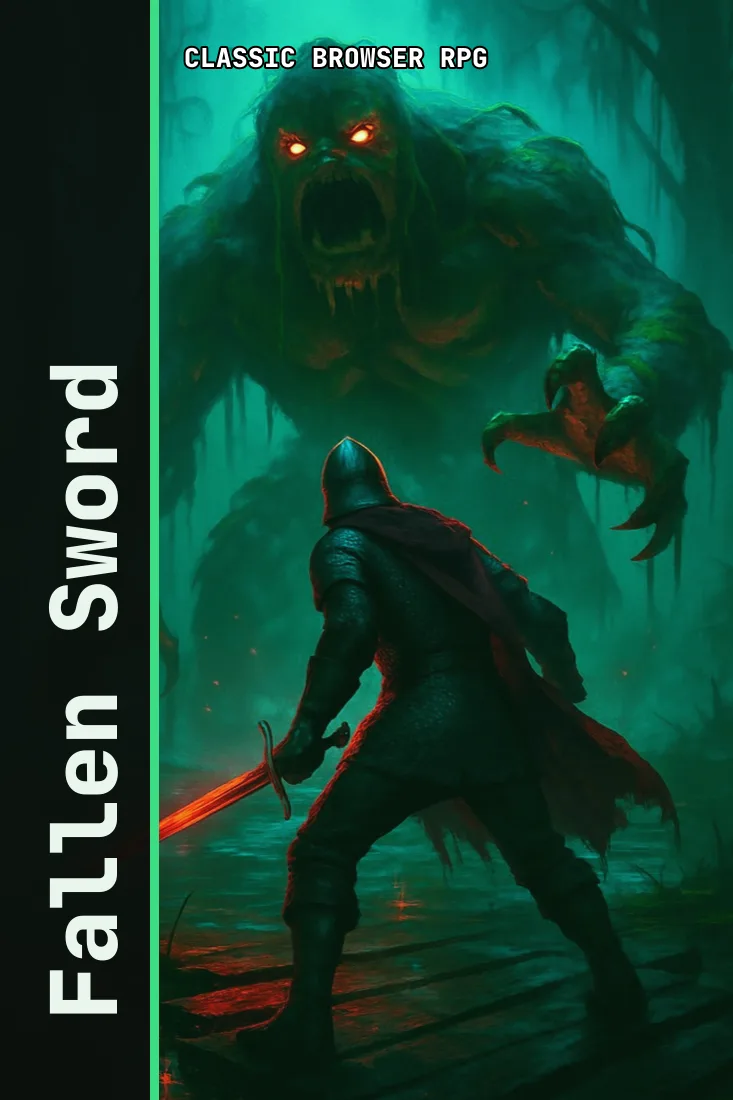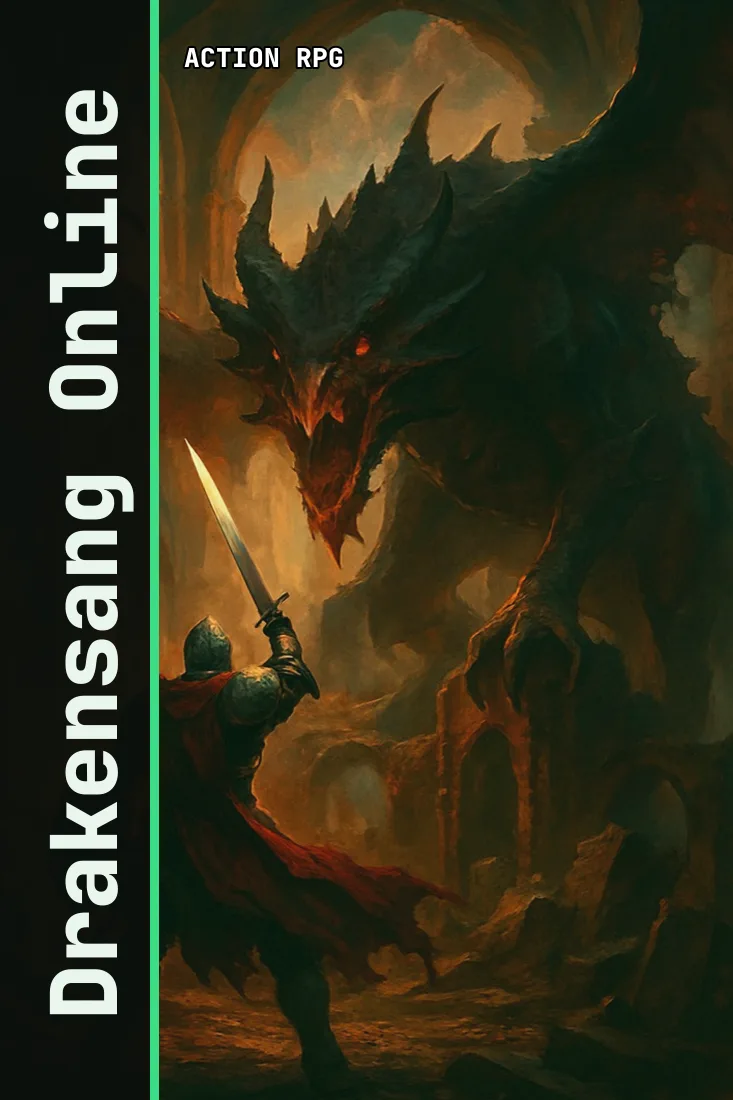
Drakensang Online is an isometric action MMORPG from Bigpoint, the Berlin studio that opened it to the public in a 2011 open beta. The camera looks down at an angle on your hero, monsters pour in, and you hold the mouse, aim skills and run from things that hit harder than you. Anyone who has played a click-and-slay action RPG on a desktop will recognize the shape within seconds.
What makes it unusual here is that nothing about a fight is decided for you. Five of the six games on our shelf resolve combat with a clock or an auto-battler; this one asks for your reflexes, your positioning and your patience with a cooldown bar. We played every class into the mid-game and spent long weekends in group content, and the hands-on feel never stopped being the point.
Four classes that change the whole game
Character creation offers four classes, and they are genuinely different games. The Dragonknight is the armoured melee fighter, built to stand in the middle and soak damage. The Ranger fights from range with a bow and lives by keeping distance. The Spellweaver is the classic caster, throwing fire, ice and lightning from the back line. The Steam Mechanicus, a dwarf engineer, works at middle range with steam-powered cannons and gadgets.
We started a Ranger first and found the opening hours tense in a good way, all kiting and repositioning. Switching to a Dragonknight felt like a different genre, slower and heavier, with more forgiveness when we misjudged a pull. The Spellweaver was the hardest to keep alive solo and the most satisfying in a group. Pick the class whose movement you enjoy, because you will be doing a great deal of it.
Dracania is built for wandering and returning
The world of Dracania is split into regions joined by towns, wilderness and dungeons, with a dark fantasy tone that leans more toward old medieval legend than bright cartoon. Towns are where you trade, take quests and meet other players; the wilds between them are where you level, and the dungeons are where the better gear waits.
The structure encourages return trips. You will clear an area, move on, and find reasons to come back at a higher level for harder versions of familiar ground. That rhythm suits a game you plan to play for months. It also means the early regions never become entirely dead, since veterans pass through them on errands and newcomers are always arriving.
Groups, guilds and the arena
You can solo a long way, but the harder dungeons are designed for a party, and they play best with people who know their roles. A Dragonknight holding attention while a Spellweaver and a Ranger work from behind is the game at its most satisfying. Guilds give you a regular crew and a chat channel, which matters more than any stat bonus.
When monsters stop being enough, the PvP arena lets you sign up for matches against other players. It is a sharp test of a build, and it shows quickly whether you understand your class or have simply been carried by gear. We lost plenty of early matches, learned more from them than from any guide, and came back with better skill choices.
How it treats a player who never opens the shop
Drakensang Online has an item shop, and the mid-game is where you notice it most: some conveniences and upgrades are clearly priced for people in a hurry. The core game, however, stayed open to us without spending. Quests, dungeons and group content carried our free characters a long way, and the gear we earned in play was good enough for everything we attempted with a competent party.
The honest summary is that time replaces money here, and the game is generous enough with drops that the trade feels reasonable. Bigpoint keeps adding seasonal content, so there is always a reason to log in that does not involve a purchase. We scored its free-player fairness a seven: not perfect, clearly workable.
Seven sunrises in Drakensang Online
- Roll two classes for a single evening each before committing; how a class moves matters more than its damage numbers.
- Follow the main quest line through the first region and read the skill tooltips as each new ability unlocks.
- Join an active guild by day three and ask which early dungeons are best run as a group.
- Spend a session learning to dodge rather than tank hits; positioning saves more lives than armour does.
- Try one arena match at the end of the week, purely to see how your build holds up against a human.
What wore thin
- The shop is more visible in the mid-game than we would like.
- Solo casters have a rough time in the tougher early dungeons.
- Busy fights can get visually cluttered on a small laptop screen.
Reasons we lingered
- Combat you control yourself, with real aiming, movement and timing.
- Four classes that each feel like a separate game to learn.
- Group dungeons that reward coordination rather than just bigger numbers.
- Seasonal updates that keep long-time characters busy.
Who will settle into Drakensang Online
Drakensang Online suits anyone who misses the feel of a desktop action RPG and wants it in a browser, with other people around. If you would rather plan than react, or only have ten minutes at a time, one of the timer games further down will treat you better.
Tamarack’s last word on Drakensang Online
After months in Dracania, Drakensang Online is still the browser adventure we reach for when we want to actually play rather than check in. The classes are distinct, the dungeons reward a good party, and the arena keeps you honest. The shop is there and you will see it, but skill and time carry you a long way. It is the deepest, most demanding game on our shelf, and the most alive.