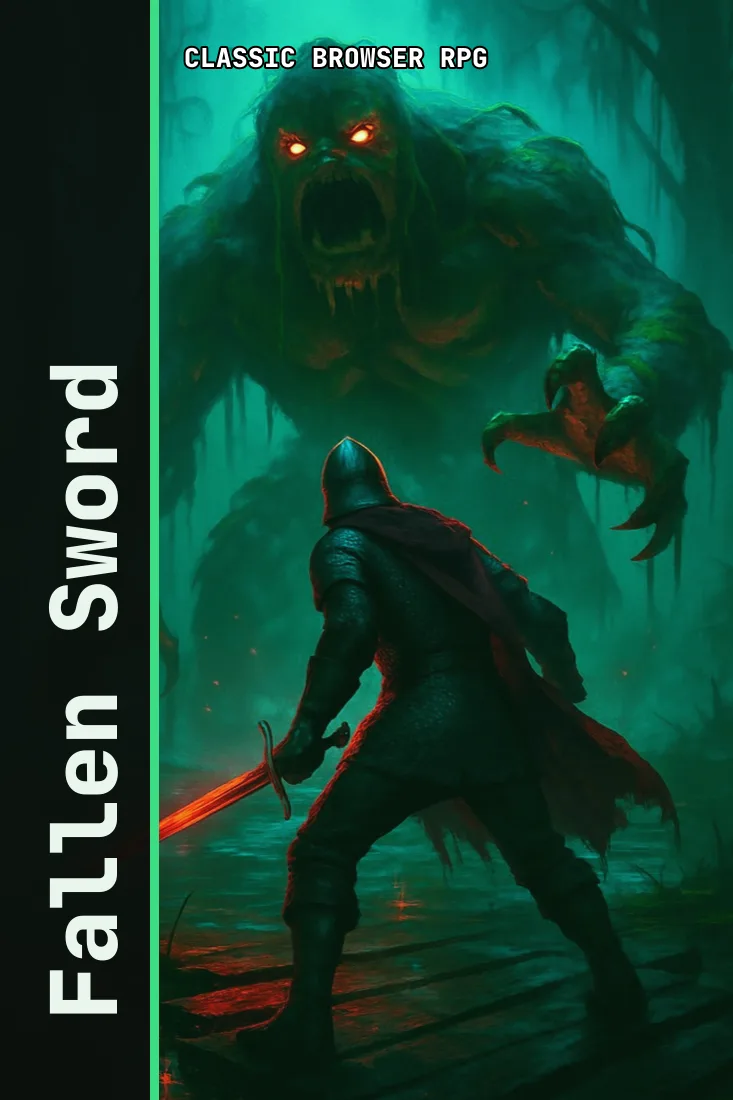
Fallen Sword is set in Erildath, a fantasy world that Hunted Cow Studios has been expanding for many years. The studio describes it as free to play with no downloads, running on HTML5 canvas in the browser, and there is a mobile app for Android pitched at players who first met the game on the web. Its promise is scale: more than a thousand levels’ worth of content, realms and creatures.
This is the purest grinder on our shelf, and we mean that kindly. You hunt monsters, you level, you move to the next realm and you do it again, and the pleasure lies in doing it efficiently. Around that simple core grows a busy player economy of crafted gear, auctions and buffs. We kept a hunter going for months and spent nearly as much time trading as fighting.
Stamina is the measure of everything
Hunting is the heart of Fallen Sword: you move through a realm, find creatures and fight them for experience and gold. Each fight spends stamina, which refills over time, so stamina becomes the real currency of your day. How many creatures you can defeat per point of stamina, and how much experience each one gives, is the sum every serious player is quietly running.
That makes the game more thoughtful than it first appears. Choosing which realm to hunt, which creatures to target and when to stop are all decisions with clear consequences. The realms themselves change as you climb, from snowy peaks to volcanic plains, and each new zone brings tougher creatures and the hope of better equipment.
Buffs make strangers into partners
Fallen Sword’s most distinctive idea is its buff market. Players learn skills that strengthen others, and buffs that raise your gold, improve your efficiency or stretch your stamina further are bought from other players before a serious hunt. Experienced hunters talk about buffs like Doubler and Conserve the way a cook talks about salt.
The effect is that nobody hunts entirely alone. Even a solo session starts with a trip to other players for the buffs you need, and a well-stocked buffer is a valued member of any community. We liked this more than we expected: it turns a single-player grind into a small economy where everyone has something to offer.
Crafting, auctions and the gear chase
Professions add another layer. Blacksmithing lets you improve equipment and alchemy lets you brew useful items, and both feed the trading and auction systems that tie the community together. With thousands of items to collect, the auction house is where you find upgrades, sell surplus and learn what things are actually worth.
For a certain kind of player this is the main event. We met people who hunted only to fund their trading and others who crafted for their guild and barely levelled at all. The economy gives the game a life beyond its levelling curve, and that is a big reason Fallen Sword earns an eight for build depth and community.
Groups, Legendary creatures and the long climb
Some of Erildath’s biggest threats are Legendary creatures, which are meant to be taken down by groups of players working together. Guilds organize around these hunts, pool resources and support their newer members with buffs and advice. Community events turn up regularly and give the long climb some welcome punctuation.
The game is free to play and our free hunter progressed well, though the shop offers ways to hurry things along. The weakest score is session rhythm: stamina pacing is fair, but the interface is dense, and a quick check-in on a phone can feel fiddly compared with Shakes & Fidget. Fallen Sword rewards a proper sit-down with a plan.
Seven sunrises in Fallen Sword
- Follow the early quests to learn hunting, then watch how much stamina each fight costs you.
- Join a guild on day two; established members are the best source of buffs and honest advice.
- Buy a couple of cheap buffs from another player before a hunt and compare your results with and without them.
- Visit the auction house daily to learn prices before you sell anything you have found.
- Pick a profession by the end of the week, blacksmithing or alchemy, based on what your guild needs.
What wore thin
- A dense, old-fashioned interface that takes a while to read comfortably.
- Hunting can feel repetitive if the economy does not interest you.
- Quick phone sessions are possible but clumsier than a desktop sit-down.
Reasons we lingered
- An enormous levelling road that a determined player will not run out of.
- The buff market, which makes other players part of every hunt.
- Crafting and auctions with real depth for trading-minded players.
- Group hunts for Legendary creatures that give guilds a shared purpose.
Who will settle into Fallen Sword
Fallen Sword is for the methodical player who enjoys numbers, markets and a long, measurable climb. If you like comparing efficiency, running a little trade on the side and being useful to a guild, it will keep you busy for a very long time.
Tamarack’s last word on Fallen Sword
Fallen Sword is not glamorous, and it does not try to be. It is a deep, honest grinder with a remarkable length, a buff market that makes the community essential and an economy that can become a game in its own right. Its interface asks for patience and its rhythm suits a desk more than a bus seat. For the planner, it is one of the most rewarding long games in a browser.